
Asset reliability
What is predictive maintenance? Definition, techniques, and how to implement it
Machine failures rarely come out of nowhere. The signs are often there weeks in advance; nobody is measuring them. Predictive maintenance is the effort to catch those signs early enough that a repair can be planned rather than chased.
Key takeaways
- Predictive maintenance sets the timing of maintenance from the actual condition of a machine and its trend, not from the calendar alone.
- Its foundation is the P-F curve: the time between the moment a developing failure is first detected and the moment the machine loses its function.
- Monitoring techniques are chosen to match the failure mode: vibration, temperature, motor current, oil analysis, or ultrasound.
- Predictive maintenance does not guarantee that every failure is predicted. Its value lies in the extra time to plan a response, and the final decision still rests with the engineer.
What predictive maintenance means
Predictive maintenance (PdM) is a maintenance approach that decides when an action is needed based on the actual condition of the equipment and the direction in which that condition is changing. Instead of replacing a bearing every six months, the team monitors the condition of that bearing and acts when the data shows a meaningful decline.
The term is often used interchangeably with condition-based maintenance (CBM), and the two are indeed closely related. In the literature, the distinction is usually drawn between two stages of analysis. Diagnostics answers what is currently happening to the machine, while prognostics tries to estimate how much longer the machine can run before it loses its function[1]. CBM rests on diagnostics: act when a condition crosses a limit. Predictive maintenance adds the prognostic element, whose framework is set out in ISO 13381-1[2].
On the plant floor, the line between the two is not always sharp. What matters more is the principle they share: maintenance decisions are made from the condition data of the machine itself, not from assumptions about the average life of a component.
Why time-based schedules alone are not enough
Time-based preventive maintenance starts from the assumption that a component becomes more likely to fail as it ages. That assumption holds for some components, but not for most others. The study by Nowlan and Heap in the airline industry found that only a small share of components showed a clear relationship between age and failure[3]. The rest failed at random, or were in fact most vulnerable early in their service life.
For components like these, periodic replacement or overhaul does little to reduce risk, and sometimes adds to it, because every teardown creates a chance of reassembly error. A more effective approach is to monitor the symptoms that precede failure and act when they appear. This is where predictive maintenance comes in.
The P-F curve: the core of predictive maintenance
The most useful concept for understanding predictive maintenance is the P-F curve, popularized by Moubray within the framework of Reliability-Centred Maintenance[4]. The curve describes the condition of a component over time.
Point P (potential failure) is the first moment at which signs of failure can be detected with the techniques available. Point F (functional failure) is the moment the component can no longer perform its function. The span between them is called the P-F interval, and it is the time available to plan and carry out a repair.
The curve has two practical consequences. First, the earlier a monitoring technique can pick up a symptom, the longer the usable P-F interval. A change in bearing vibration, for example, is usually detectable well before the bearing feels hot. Second, monitoring has to be more frequent than the P-F interval. If a component has a P-F interval of about four weeks, a monthly inspection risks missing the whole interval. Moubray recommends setting the monitoring task interval well below the P-F interval, so that there is still time to act once a symptom is found[4].
Common condition monitoring techniques
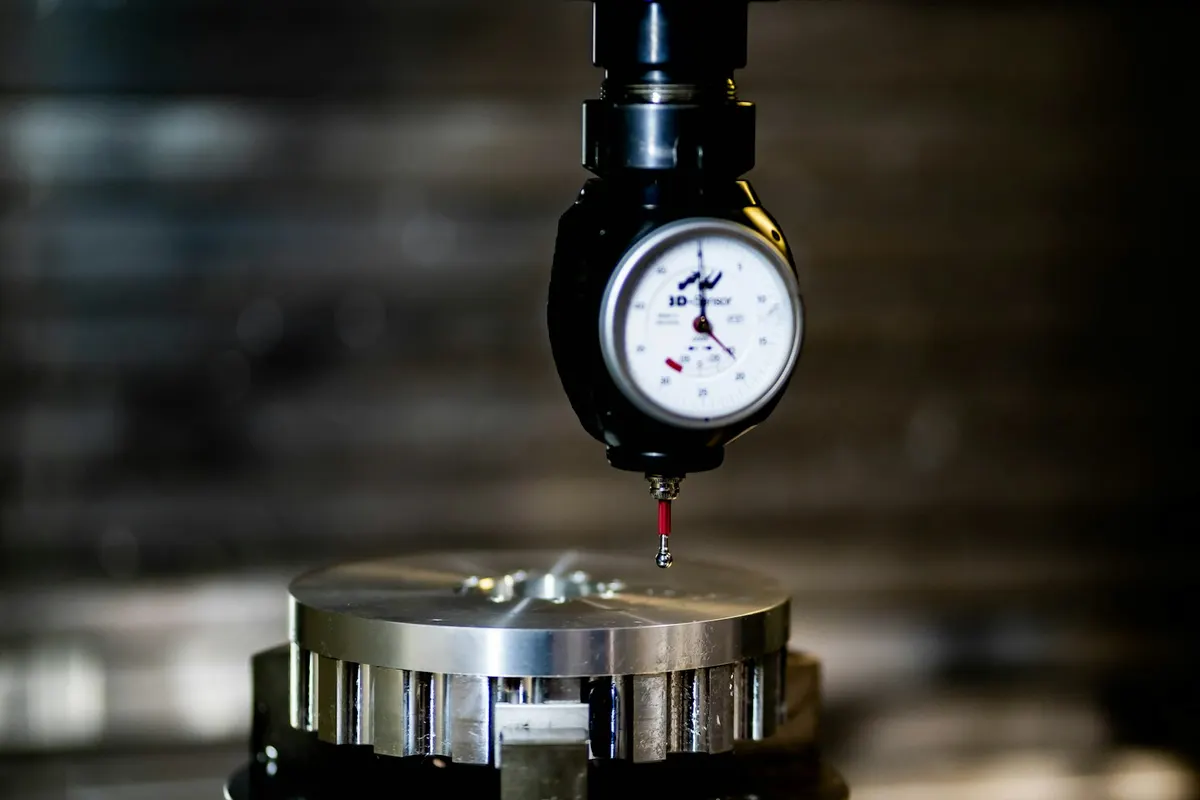
ISO 17359 gives general guidance on choosing monitoring parameters based on the failure modes to be detected[5]. The principle is simple: start from the way an asset usually fails, then choose the parameter that changes earliest once that failure begins to develop.
| Technique | What is measured | Typically detects |
|---|---|---|
| Vibration analysis | Vibration amplitude and spectrum | Imbalance, misalignment, bearing damage, mechanical looseness |
| Temperature | Surface or fluid temperature | Poor lubrication, overload, friction |
| Motor current | Current and electrical signal patterns | Abnormal load, rotor problems, electrical faults |
| Oil analysis | Wear particles, viscosity, contaminants | Internal wear in gearboxes and engines, contaminated lubricant |
| Ultrasound | High-frequency sound waves | Compressed air leaks, bearing lubrication, electrical arcing |
| Thermography | Heat distribution from infrared images | Loose electrical connections, hot panels, damaged insulation |
Technique selection follows the failure modes of the asset, as recommended by ISO 17359 [5]; Mobley covers each technique in detail [6].
For vibration, ISO 20816-1 provides a widely used evaluation framework. Machine condition is grouped into zones, ranging from that of a newly commissioned machine to a condition likely to cause damage[7]. These zones are useful as a starting point, but the most meaningful limits usually come from the trend of the machine itself, that is, how far its condition has drifted from its normal baseline.
From raw data to a decision
Sensors produce only numbers. For those numbers to become action, the data has to pass through several processing stages. ISO 13374-1 describes these stages as a sequence of blocks[8].
- 01Data acquisition
- 02Signal processing
- 03State detection
- 04Health assessment
- 05Prognosis
- 06Recommended action
In recent years, machine learning methods have been widely applied at the state detection stage, particularly for anomaly detection: a model learns the normal pattern of a machine and flags when that pattern deviates. This approach is useful for machines with many parameters, but it has limits worth understanding. Real failures are generally rare, so failure data is scarce, and a model that knows only normal operation may flag changes that are in fact expected, for instance because the production load has changed.
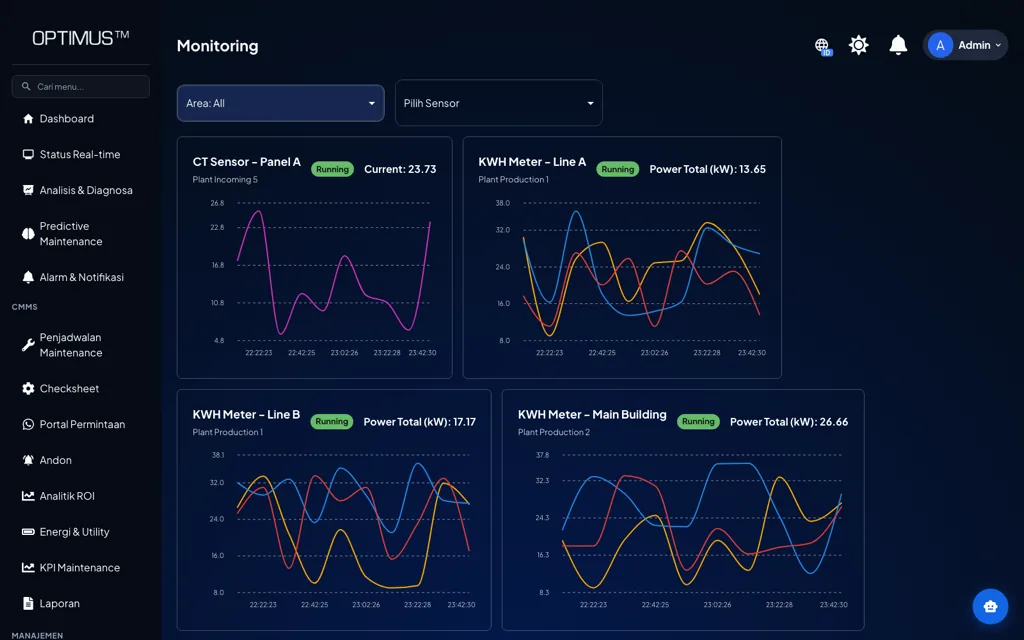
For that reason, a good predictive maintenance system does not stop at an anomaly score. It shows which parameter changed, how far it is from normal, and since when, so the engineer can judge whether the change calls for action.
When predictive maintenance is worth it
Predictive maintenance requires sensors, software, and time for analysis. Not every asset justifies that investment. The RCM framework recommends choosing a strategy for each failure mode, taking its consequences into account[4].
| Asset characteristics | Strategy that usually fits |
|---|---|
| Critical, costly failure, symptoms detectable early | Predictive or condition-based maintenance |
| Wear clearly related to age or usage | Preventive, based on time or operating hours |
| Inexpensive, not critical, easy to replace | Run to failure |
| Hidden failure, for example a protective system | Periodic functional testing |
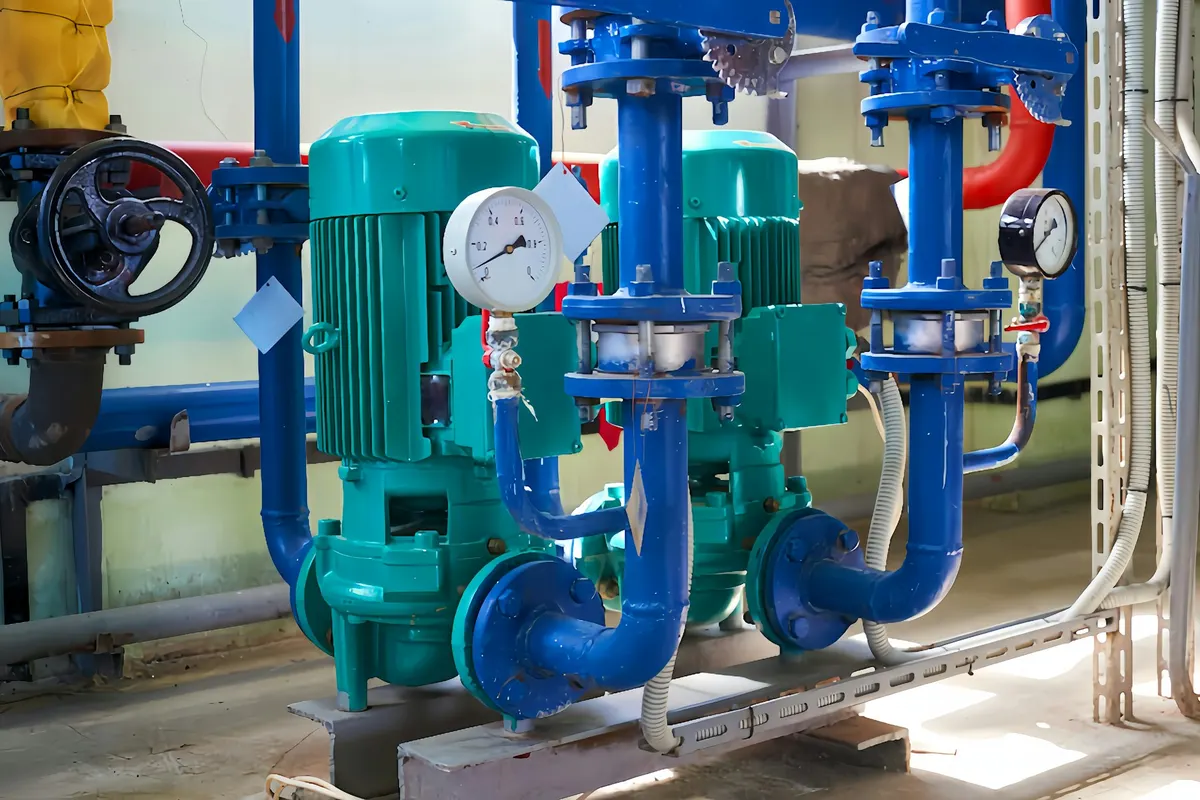
The first candidates for predictive maintenance are usually critical rotating assets: pumps, compressors, blowers, main drive motors, gearboxes, and generator sets. These assets have well-documented failure modes, their symptoms can be measured through vibration and temperature, and when they stop, production is affected directly.
Steps to implement predictive maintenance
- Identify critical assets. Assess how a stoppage of each asset affects production, safety, and quality. Start with a small number of assets that have the greatest impact.
- Understand their failure modes. For each asset, record how it usually fails and which symptoms come first. The repair history in a CMMS is the most valuable first source.
- Choose techniques and measurement points. Match each technique to a failure mode, then decide where to mount sensors so that they reflect the condition of the critical components.
- Build a baseline. Collect data under normal conditions for some time before setting alarm limits. Generic limits are best used only as a starting point.
- Link alarms to action. Every valid alarm should lead to a clear work order: who inspects, what is inspected, and when.
- Verify after the repair. Confirm that the condition data returns to normal after the work is done. Without verification, there is no way to know whether the root cause has been dealt with.
- Review and adjust. Periodically evaluate which alarms proved correct and which were false, then adjust the limits and the monitoring frequency.
Myths and limits worth understanding
- "Predictive maintenance predicts every failure." It does not. Failures that develop very quickly, or whose symptoms are not measured by the installed sensors, can still happen. Predictive maintenance improves the odds of catching a failure early; it does not remove the risk.
- "Installing sensors is enough." Data without a follow-up process just adds screens. The value appears when alarms are reviewed, decided on, and acted upon.
- "More alarms means more safety." Alarms that fire too often, and wrongly, teach the team to stop paying attention. Limits tuned to the baseline of each machine reduce this problem.
- "Algorithms replace engineers." Models help filter and flag changes. The decision on when to stop a machine, weighing the production schedule and the risk, remains the engineer's decision.
Conclusion
Predictive maintenance moves the basis of maintenance decisions from the calendar to the real condition of the machine. Its way of thinking rests on the P-F curve: find symptoms as early as possible, monitor often enough not to miss them, and use the time available to plan the repair in an orderly way.
Success depends more on discipline than on sophisticated algorithms: choosing the right assets, understanding how those assets fail, linking every alarm to an action, and verifying the result of each repair. Starting with a few critical assets, the approach can be extended once its benefits are visible on the production floor.
Frequently asked questions
What is predictive maintenance?
Predictive maintenance is a maintenance approach that sets the timing of an action based on the actual condition of a machine and how that condition is trending, using data such as vibration, temperature, and motor current.
What is the difference between predictive and preventive maintenance?
Preventive maintenance is scheduled by time or usage, for example every 2,000 hours. Predictive maintenance is scheduled by the actual condition of the machine, so action is taken when the data shows the condition declining.
What is the P-F interval?
The P-F interval is the time between the moment signs of failure can first be detected (point P) and the moment the component loses its function (point F). Monitoring must be more frequent than this interval so that symptoms are not missed.
Can predictive maintenance predict every failure?
No. Failures that develop very quickly, or whose symptoms are not measured by the installed sensors, can still happen. The main benefit is extra time to plan a response to failures whose symptoms can be detected.
Which assets should be monitored first?
Usually critical rotating assets, such as pumps, compressors, main drive motors, gearboxes, and generator sets, because their failure modes are well documented and their symptoms can be measured through vibration and temperature.
References
- [1]Jardine, A. K. S., Lin, D., & Banjevic, D. (2006). A review on machinery diagnostics and prognostics implementing condition-based maintenance. Mechanical Systems and Signal Processing, 20(7), 1483-1510.
- [2]International Organization for Standardization. (2015). ISO 13381-1:2015, Condition monitoring and diagnostics of machines: Prognostics, Part 1: General guidelines. ISO.
- [3]Nowlan, F. S., & Heap, H. F. (1978). Reliability-centered maintenance (Report No. AD-A066579). United States Department of Defense.
- [4]Moubray, J. (1997). Reliability-centred maintenance (2nd ed.). Butterworth-Heinemann.
- [5]International Organization for Standardization. (2018). ISO 17359:2018, Condition monitoring and diagnostics of machines: General guidelines. ISO.
- [6]Mobley, R. K. (2002). An introduction to predictive maintenance (2nd ed.). Butterworth-Heinemann.
- [7]International Organization for Standardization. (2016). ISO 20816-1:2016, Mechanical vibration: Measurement and evaluation of machine vibration, Part 1: General guidelines. ISO.
- [8]International Organization for Standardization. (2003). ISO 13374-1:2003, Condition monitoring and diagnostics of machines: Data processing, communication and presentation, Part 1: General guidelines. ISO.