
Case study · Metal casting
Unplanned downtime at a casting plant fell from 30 to 1.5 hours a month
PT Asian Isuzu Casting Center put condition monitoring on the motors, gearboxes, pumps, and blowers that cannot stop in the middle of a pour. Bearing anomalies now show up 4 to 6 weeks before the vibration can be felt, so repairs are scheduled for the off shift.
Results over 12 months
- unplanned downtime per month
30 to 1.5 h
unplanned downtime per month
- earlier warning on bearing anomalies
4 to 6 weeks
earlier warning on bearing anomalies
- potential major failures repaired on schedule
6 jobs
potential major failures repaired on schedule
- to pay back the investment
± 17 working days
to pay back the investment
The downtime hours and the Rp 20 million per hour loss are AICC’s figures. The avoided loss is simple arithmetic: 28.5 hours a month times Rp 20 million, about Rp 570 million a month, against Rp 450 million invested in sensors, panels, integration, and field work.
The challenge
Casting depends on drive motors, gearboxes, pumps, and blowers that run continuously. When one stops without warning, the mould flow stops with it, and the line cannot wait.
Maintenance used to be reactive. A failure was found when the machine had already stopped, adding up to about 30 hours of unplanned downtime a month. At roughly Rp 20 million an hour, hundreds of millions of rupiah were lost every month before a repair even began.
What we installed
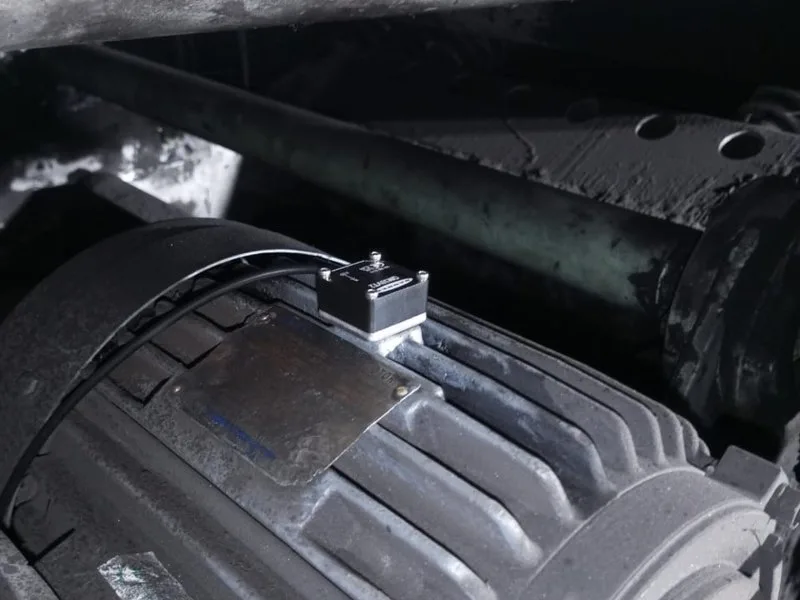
Sensors went into six areas: Sand Tank 1 and 2, BE, MM, OC, and moulding pressure. All data stays on the plant’s local network and never goes out to the internet.
- Vibration: Banner QM30VT2 on bearings and motors, read through a DXM over Modbus TCP
- Temperature and pressure: Pt100 and pressure transmitters through an ifm IO-Link master
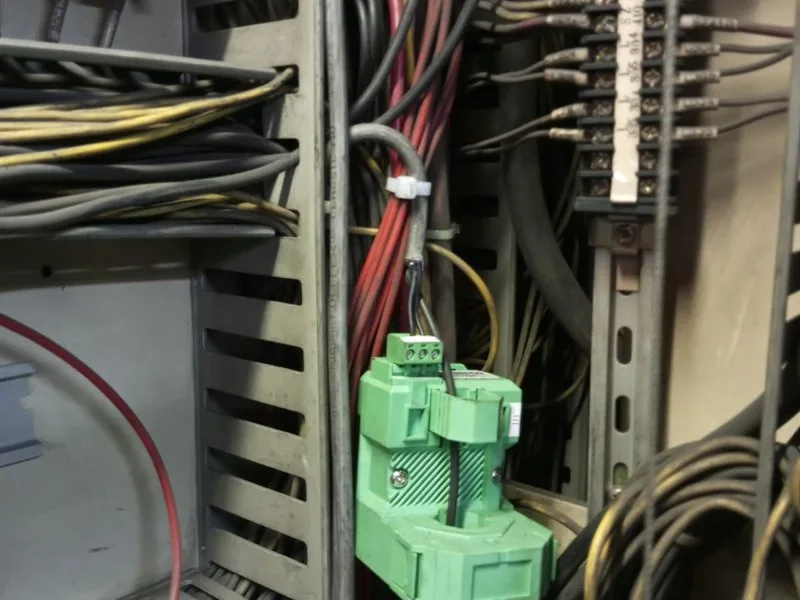
- Current: clamp-on CTs, including on 3 kV motors, through a Mitsubishi FX5 PLC
- An on-premise server in the plant, with no change to machine control logic
How the team uses it
Each sensor is compared with its own machine’s baseline and with the ISO 10816 zone limits. When a bearing’s vibration starts to climb, the maintenance team looks at the trend, confirms it against other parameters on the same machine, and schedules the repair.
Spectrum analysis catches early bearing raceway damage 4 to 6 weeks before the vibration can be felt or the bearing runs hot. That is enough time to get the parts ready and pick an off shift, without cutting into the casting schedule.
The result
Over 12 months, unplanned downtime fell from about 30 to 1.5 hours a month. Six potential major failures were handled as scheduled repairs on the off shift instead of as emergencies.
The system does not guarantee that a machine never fails. What changed is the timing: the signs show up earlier, so the team decides when a machine stops, not the machine.
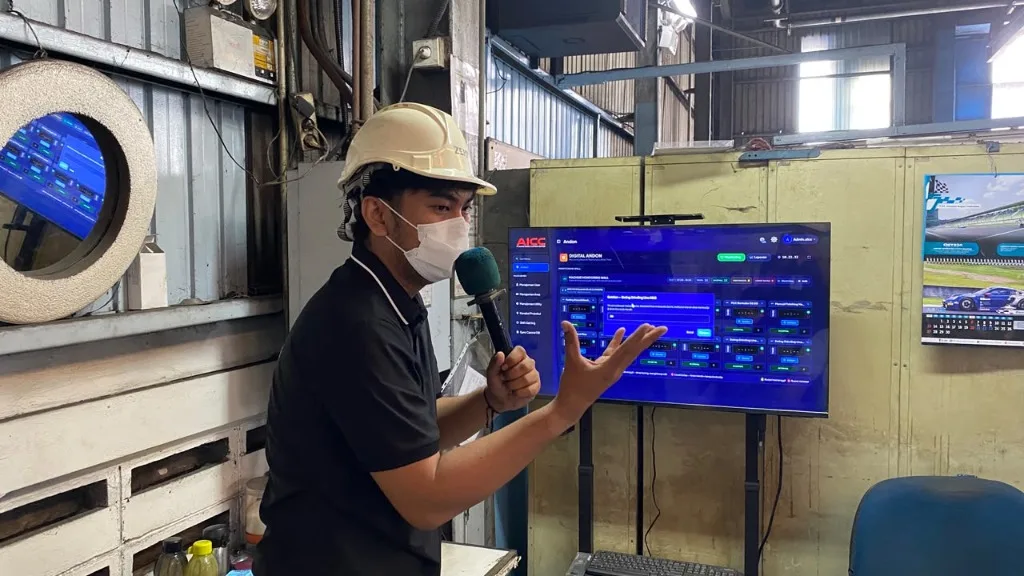
On site
PT Asian Isuzu Casting Center
Capabilities used
What runs at this plant
OPTIMUS
Condition Monitoring
Vibration, temperature, current, and other condition parameters tracked continuously on critical assets, with thresholds, trends, and tiered alarms.
OPTIMUS
Predictive Maintenance
Condition trends, anomaly detection, and maintenance history combined into recommended actions, so the maintenance schedule follows asset condition and not just the calendar.
OPTIMUS
Asset Health Monitoring
A health score per asset, a ranking based on condition and criticality, and a watchlist of critical assets that makes the order of work clear.
OPTIMUS
CMMS
Preventive and corrective maintenance, scheduling, work orders, checksheets, spare parts, and work history all tied to the same asset.
Start with the machines that cost most when they stop
AICC started with the assets in its most critical areas. We can work out with your team which machines are worth watching first, using your plant’s own figures.
- No obligation to buy
- A reply within business hours
- WhatsApp works too